
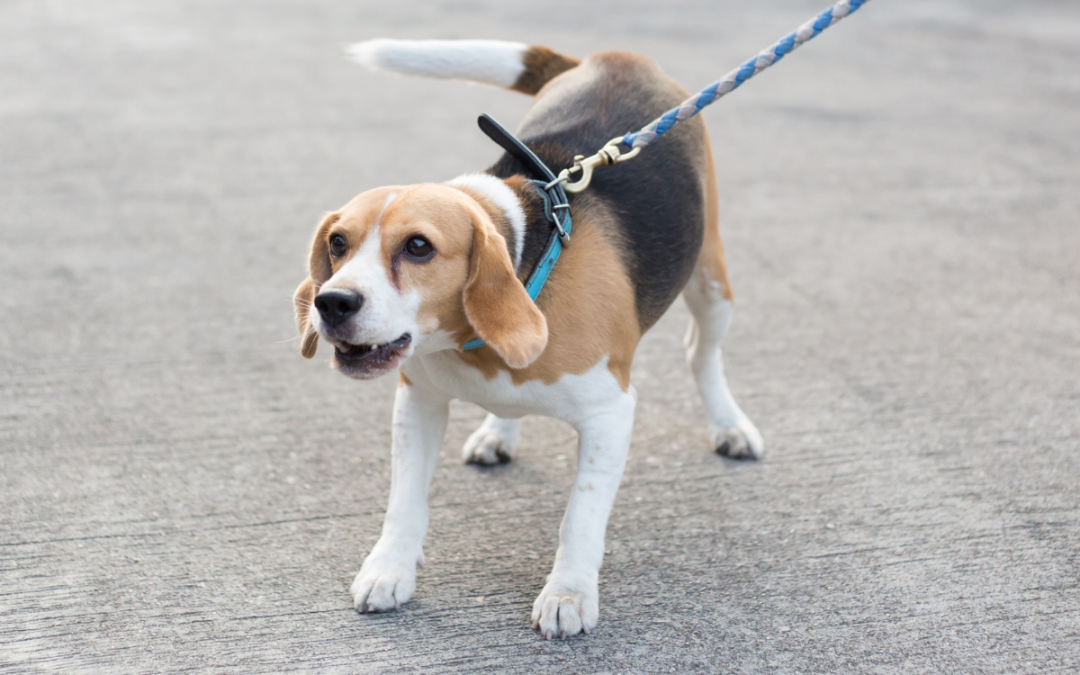
Walking your dog is supposed to be a fun activity that helps you spend a little time bonding with your pooch and get them the exercise and mental stimulation they need to thrive.
But unfortunately, many dogs present challenges for their people that can take the joy out of the entire experience. And while Seattle is a great town for four-footers, it also presents a few complications that can make this even more difficult. Don’t worry — I’ll share some of the most common walking problems Seattle dogs have, as well as some tips for addressing them below.
Common Dog-Walking Problems for Seattle Owners
The following dog-walking problems are pretty common, but fortunately, they can all be addressed. Just remember that you’ll need to be patient when implementing any of the recommended solutions and always tailor your approach to your pet’s specific needs.
1. Pulling on the Leash
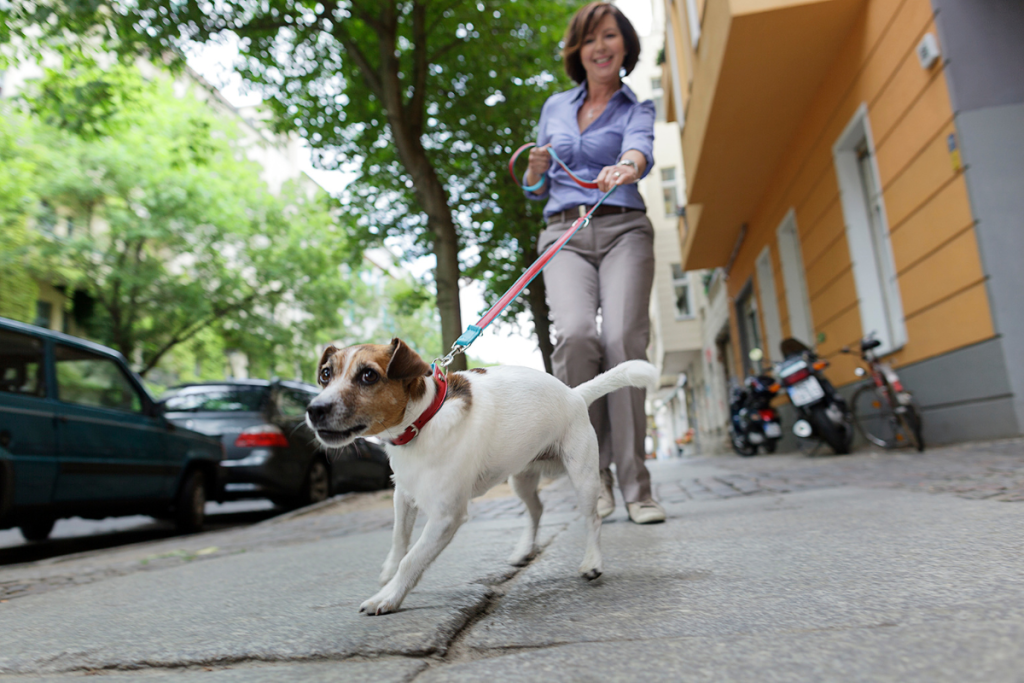
Perhaps the most common walking problem, leash pulling can actually be dangerous for pets and their people. Dogs who pull on the leash may lunge into oncoming traffic or even cause you to slip and fall. You could even lose control of your pet on a busy Seattle sidewalk if the leash or collar happens to break.
A few good ways to address leash pulling include:
- Rewarding your dog every time the leash goes slack. Over time, they’ll learn that keeping the leash loose means good things happen.
- Stop walking whenever your pooch starts to pull on the leash. This helps remove the incentive to pull, as they don’t get any closer to the thing that’s piquing their interest.
- Incorporate some attention-building games in your routine. Even simple things like teaching your dog to “check in” with you regularly will help keep them more focused and stimulated, reducing their desire to pull.
Leash pulling can be a challenging walking issue to address in some cases, so don’t hesitate to reach out to a professional trainer if you need some extra support.
2. Reactivity (Towards Dogs or People)
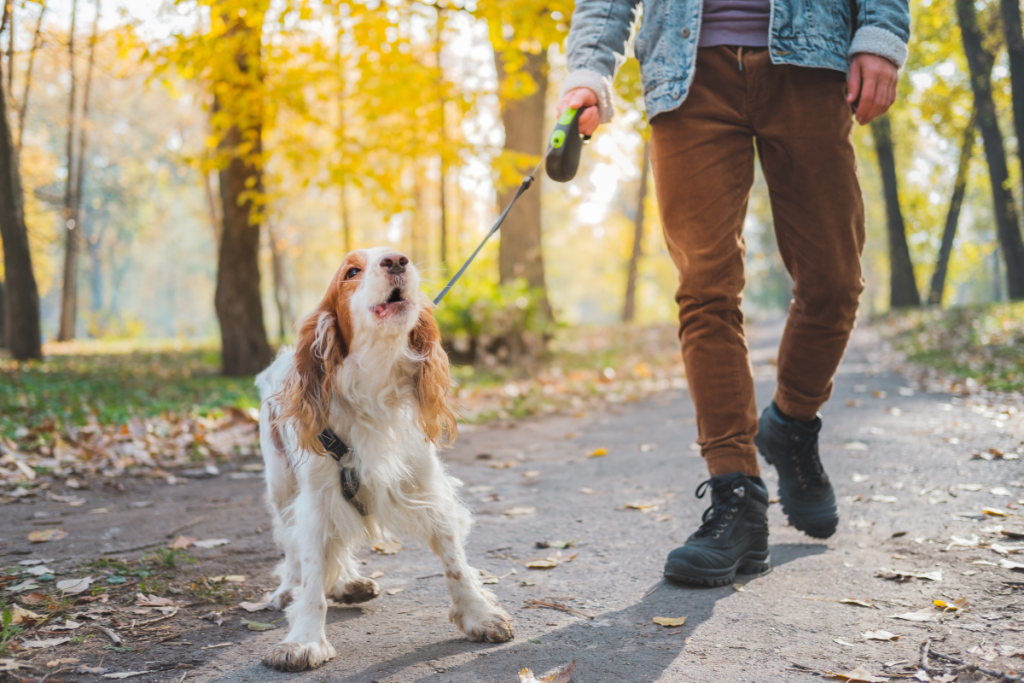
Often mistaken for true aggression, reactivity is better described as a problem stemming from intense feelings that a dog doesn’t know how to control or manage. Reactivity can be caused by previous trauma, but it can also develop without any obvious trigger.
Regardless of the reason your dog starts struggling with reactivity, you’ll need to get started addressing it pronto, as it can require a lot of time and training to resolve. In most cases, you’ll have the best results by simply engaging a certified dog trainer or behaviorist, but there are some things you can try yourself.
Desensitization and counterconditioning are two of the most effective techniques for addressing reactivity.
Desensitization involves gradually teaching your dog that overly stimulating things (whether that’s other dogs, people, cars, or bicycles) aren’t scary. You’ll do this by watching your dog’s trigger from a great distance (maybe 100 yards or more for really reactive Rovers). The key is to keep your pet far enough away that the trigger doesn’t cause your pet to flip out and start barking or lunging.
Over time, your dog will learn that the trigger is just a normal part of life, and you’ll be able to allow them to get closer and closer to it over time.
Counterconditioning works in a similar way, except that you’re going to actually flip the way your dog feels about a trigger. Start by taking your dog somewhere safe that allows them to see their trigger from a distance. But this time, you’re going to give your pooch a delicious, 10-out-of-10 treat every time they look at the trigger without reacting negatively.
Whereas desensitization helps keep a dog calm when seeing triggers, counterconditioning actually results in a dog that enjoys seeing the trigger, because every time they do, really good things happen.
3. “Planting” (Refusing to Walk)
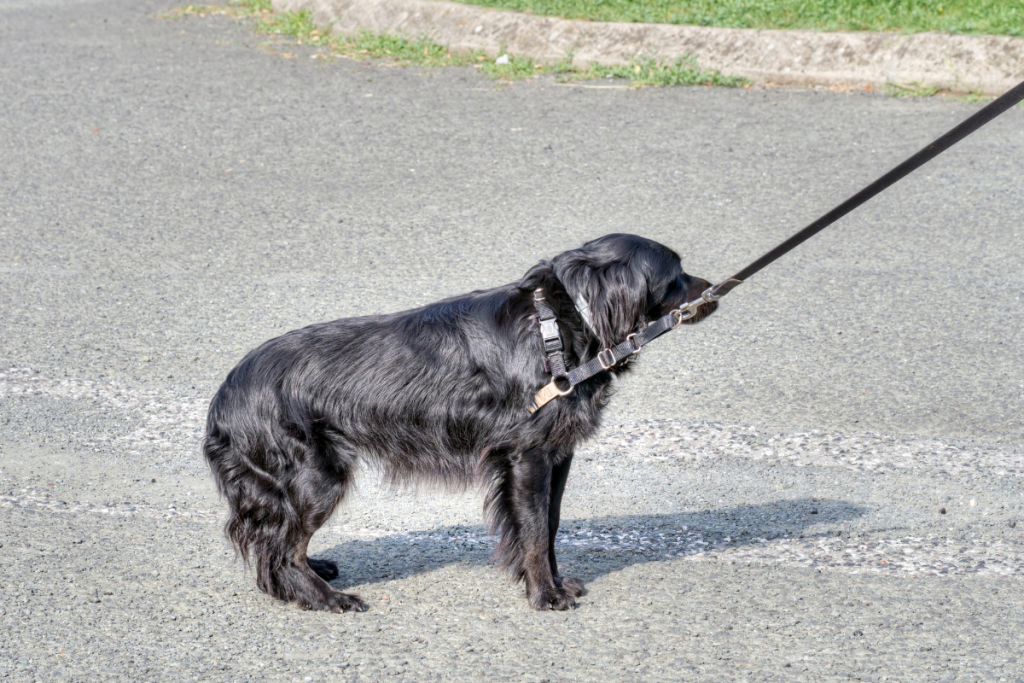
“Planting” occurs when a dog hunkers down and refuses to move. But while many pet parents believe that the behavior is defiant in nature, it often stems from insecurity or a breakdown in your communication.
For example, your dog may be overwhelmed by all of the sights, sounds, and smells of busy urban spots in the Seattle area. However, it can also happen when your dog doesn’t understand what you want them to do.
In either case, you’ll want to avoid pulling on the leash — that’s just going to make your dog resist moving even more. Instead, approach the situation with care and compassion, and try to reassure your pet. After a few minutes of this, you can start gently encouraging them to move. It may be more effective to try to get them to move in a different direction in some cases.
With all of that said, it can be difficult to determine the root cause of planting behavior, and many dog guardians will need professional help to correct the issue.
4. Aversions to Inclement Weather
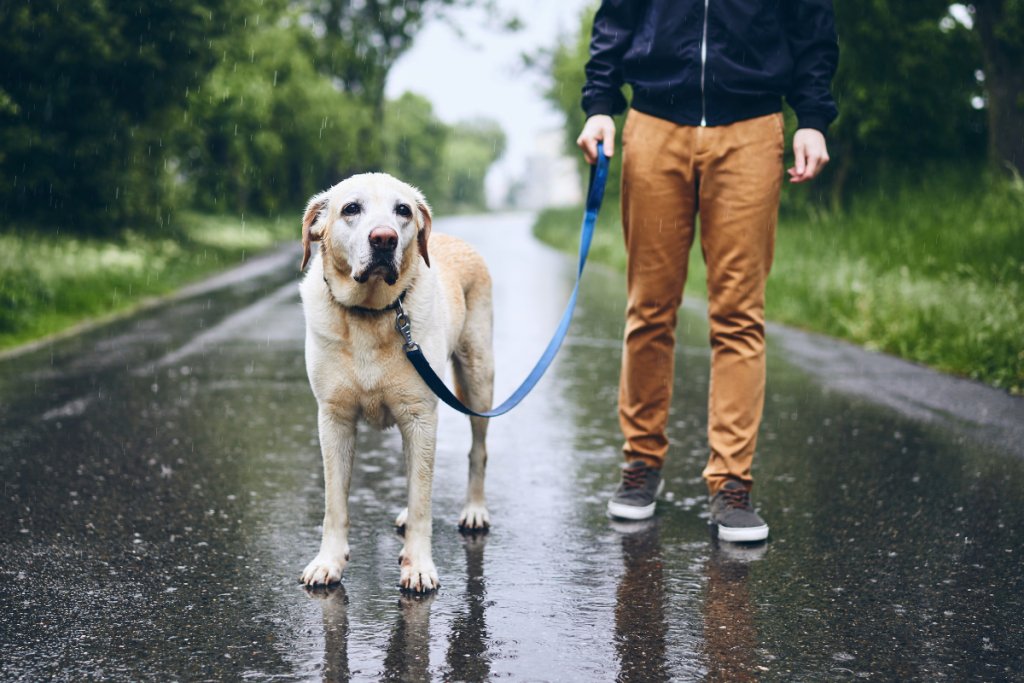
Some dogs don’t mind a little snow or rain at all, but others absolutely hate the wet stuff. Some will even refuse to venture outdoors in bad weather, even if it means they have an accident inside. This can all be quite an issue for pet parents living in Seattle and leave you nervously checking the forecast on your phone every day.
Fortunately, there are things you can do to address this issue. For starters, you’re going to avoid pressuring your dog — that’ll just lead to anxiety and make things worse. Instead, employ the desensitization and counterconditioning principles we discussed earlier. This means starting during very mild weather (just a drizzle or light dusting of snow on the ground) and providing positive reinforcement when your dog makes any progress at all.
You may also want to experiment walking on different kinds of surfaces. Your doggo may not mind walking on sidewalks in good weather, but strongly prefer walking on grass, gravel, or mulch once it starts to rain or snow. It’s also a good idea to fit your dog with some appropriate outerwear that’ll keep them dry and warm.
Get the Dog-Walking Help You Need in Seattle!

When applied alongside a healthy dose of patience, the solutions outlined above should help address the walking issues you’re experiencing with your woofer. But some four-footers present bigger challenges than others, and it can occasionally be difficult for pet guardians to get the kind of results they’d like.
That’s not a problem for pet parents in the Seattle area! I can provide a few different solutions for your dog-walking woes.
For relatively minor issues, my structured pack walks may be just the trick. These walks feature up to five (size- and personality-matched) doggos, and they’re great for not only providing exercise and stimulation but also instilling good leash manners.
Or, if your pooch is really struggling or suffering from something like fear or reactivity, private dog training sessions may be a better idea. I can design a custom plan for you and your pet that’ll help put an end to the walking problems you’re experiencing so you can start enjoying a more harmonious life with your pet.
Contact me now to get started!

Recent Comments